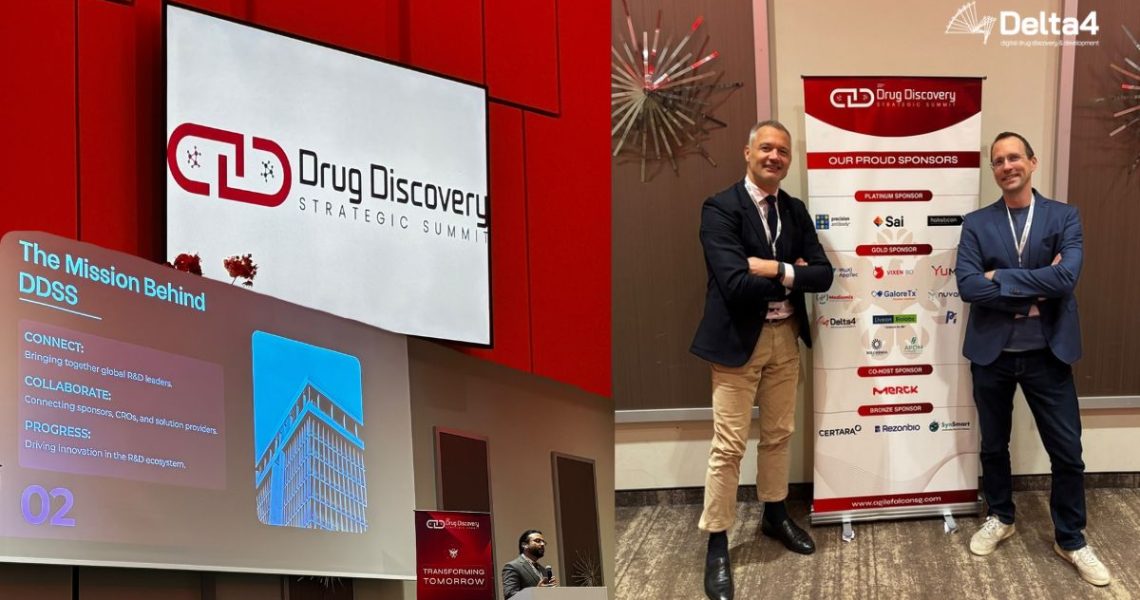

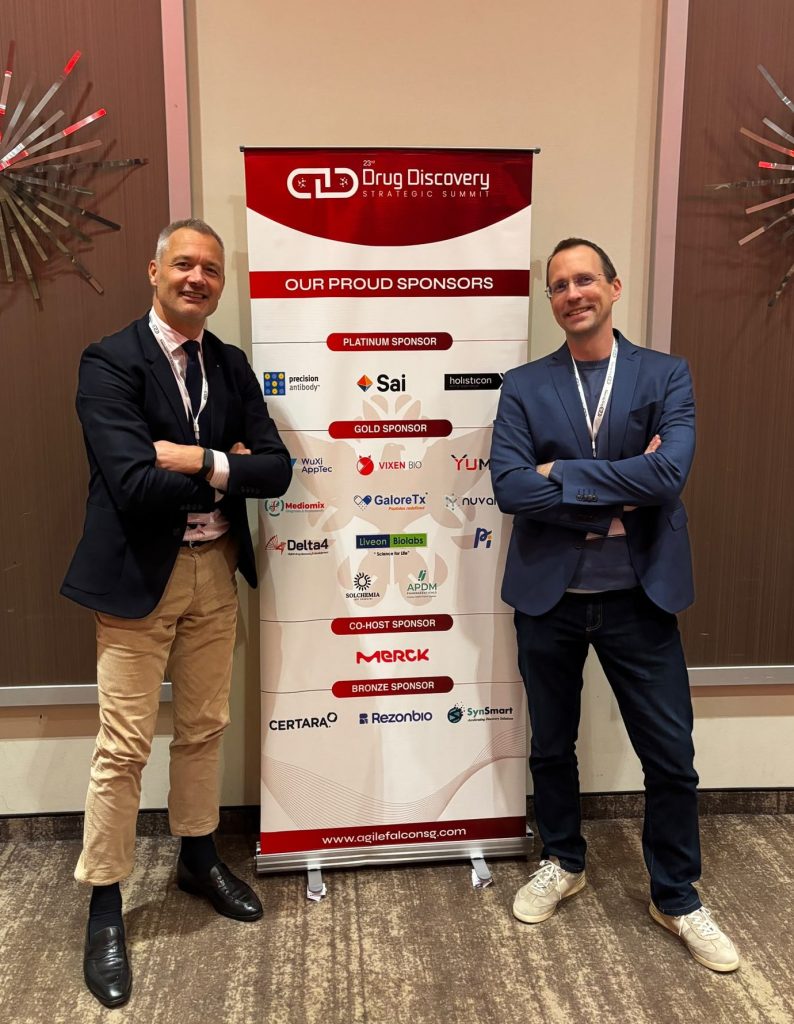
What do pharmaceutical teams need from biological modeling—and how can computational approaches help answer their most pressing research questions? These were among the topics explored by Delta4’s Paul Perco, Computational Biology Lead, and Josef M. Thalmann, Partner for Business Development & Sales, at the Drug Discovery Strategic Summit (DDSS) in Berlin.
Organized by Agile Falcon Strategic Group, the invitation-only event brought together senior decision-makers from pharma and biotech for discussions on innovation, drug discovery, and strategic partnerships. Delta4 was pleased to support the summit as a Gold Sponsor.
The Growing Role of Biological Modeling
One topic kept coming up throughout the summit: the growing role of biological modeling in drug discovery. Discussions highlighted the challenges pharmaceutical teams face in translating complex biology into insights that can support better-informed research and development decisions.
How can different sources of biological evidence be brought together meaningfully? How can disease mechanisms be connected to the effects of a drug? And how can these insights help teams identify and prioritize therapeutic opportunities?
These are questions we work on at Delta4. We combine systems biology, computational modeling, and large-scale biomedical data to investigate disease mechanisms and drug modes of action. These insights are then used to identify new therapeutic opportunities.
Connecting Scientific Approaches with Pharma’s Priorities
Beyond the scientific discussions, the summit offered valuable opportunities to hear how pharmaceutical R&D teams are approaching their current challenges. There was strong curiosity about computational approaches, alongside questions about how they work, how to interpret their outputs, and where they can add value within existing research programs.
For Delta4, these conversations are an opportunity to make our approach more tangible: explaining the biology behind the models, discussing what the results can—and cannot—tell us, and connecting those insights to specific research questions.
An important part of these conversations is the wish of partners to incorporate their own preclinical data. Having invested significant time and expertise in a research area, it is only natural that they want their internal findings and the knowledge of their teams to be considered alongside computational insights. At Delta4, we can incorporate partner-provided preclinical data into our analyses, connecting our computational approach with the evidence and extensive expertise partners bring to the table.
With Paul and Josef representing computational biology and business development, the summit was an opportunity to explore both the scientific questions and the potential frameworks for collaboration.
New Perspectives, New Possibilities
Each conversation opens a new door—whether it introduces a different way of thinking about a biological question, challenges one of our assumptions, or sparks an idea for working together. For Paul and Josef, these exchanges are also a source of inspiration: a chance to learn from people who approach drug discovery from different angles and return to the team with fresh questions and renewed enthusiasm.
There is certainly no shortage of challenges in drug discovery, but conversations like these ensure that it never gets boring.
Thank you to Agile Falcon Strategic Group for bringing this community together, and to everyone who shared their ideas, questions, and perspectives with us in Berlin. We were delighted to support the summit and look forward to seeing where these conversations lead.