Success stories from our computational drug discovery pipeline
FSGS Case Study:
Identifying new Treatment Options For a Disease Of Interest
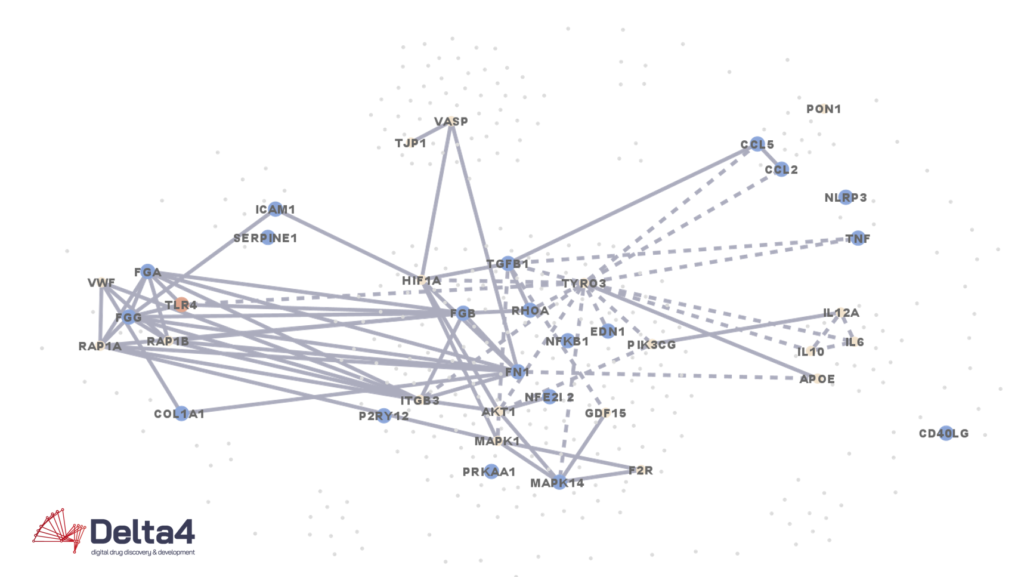
Delta4 identified a potential therapeutic option for Focal Segmental Glomerulosclerosis (FSGS), a rare chronic kidney disease without any approved therapy.
Delta4 leveraged its state-of-the-art proprietary AI platform, Hyper-C, together with the expertise of its computational biologists, to generate a network-based molecular model of FSGS pathophysiology. Using this advanced computational drug screening approach, Delta4 identified clopidogrel, an anti-platelet drug, as a promising therapeutic candidate for FSGS. Clopidogrel was subsequently shown to alleviate disease progression in an accepted FSGS animal model, supporting its potential for clinical trials.
Identifying new indications for an approved compound
Delta4, a frontrunner in the TechBio realm, unveiled potential new indications for the drug Iguratimod using its AI-powered in-silico platform, Hyper-C. Tapping into sophisticated algorithms, Hyper-C meticulously analyzed the Iguratimod drug model against an extensive catalog of disease profiles, pinpointing potential avenues for indication expansion. This data potentially revolutionizes how we perceive and utilize Iguratimod in the medical field.
Dive into our video presentation to uncover the intricate processes by which Hyper-C made these revelations and explore the promising new indications. Don’t miss out on this exciting journey into the future of drug indication expansion!
Targeting Neuroinflammation via Reactive
Astrocytes
Delta4 and Concept Life Sciences achieved a key milestone by jointly presenting their results at BNA2025, Europe’s leading neuroscience conference.
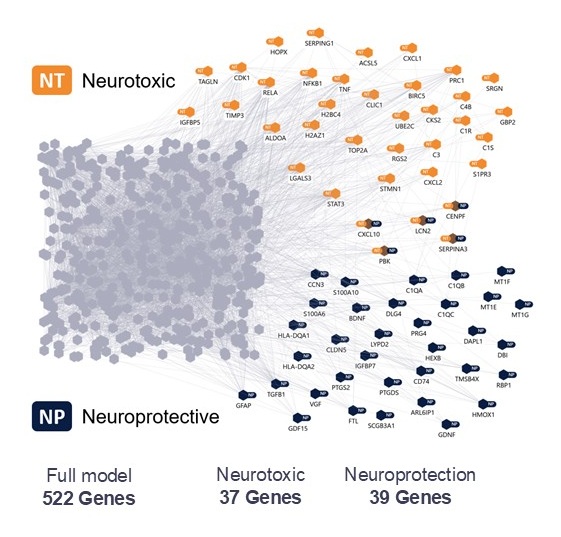
This collaboration addressed a critical challenge in neurodegeneration: identifying compounds and targets capable of reversing the pro-inflammatory, neurotoxic state of reactive astrocytes. Concept Life Sciences generated high-quality transcriptomic data from human iPSC-derived reactive astrocytes under inflammatory conditions.
Delta4 integrated this data into Hyper-C to build a mechanistically informed computational model, enabling large-scale virtual compound screening and target identification.
The iterative feedback loop between experimental biology and computational modeling uncovered both known and novel targets with strong biological relevance, demonstrating a scalable blueprint for accelerating discovery in neuroinflammatory diseases.
Data-driven modeling of chronic kidney disease progression
Delta4 currently contributes advanced computational modeling to the PICKED project, an international collaboration focused on improving prediction and intervention in chronic kidney disease (CKD). Using their Hyper-C platform, the Delta4 team models molecular mechanisms underlying the transition from acute kidney injury to CKD, enabling data-driven target identification and AI-supported drug repurposing.
Access to high-quality, unpublished datasets and close collaboration with experimental partners allow a rapid validation of computational hypotheses and increase translational confidence. This integrated approach supports the development of more precise therapeutic strategies and de-risks early discovery decisions in kidney disease.
Delta4’s role in PICKED was recognized by the Austrian Research Promotion Agency (FFG) as a success story, underscoring its position as a reliable industry partner for mechanistically informed, scalable disease modeling in complex indications.